Concrete Demolition and Removal: What You Need to Know Whether you're renovating a residential driveway…
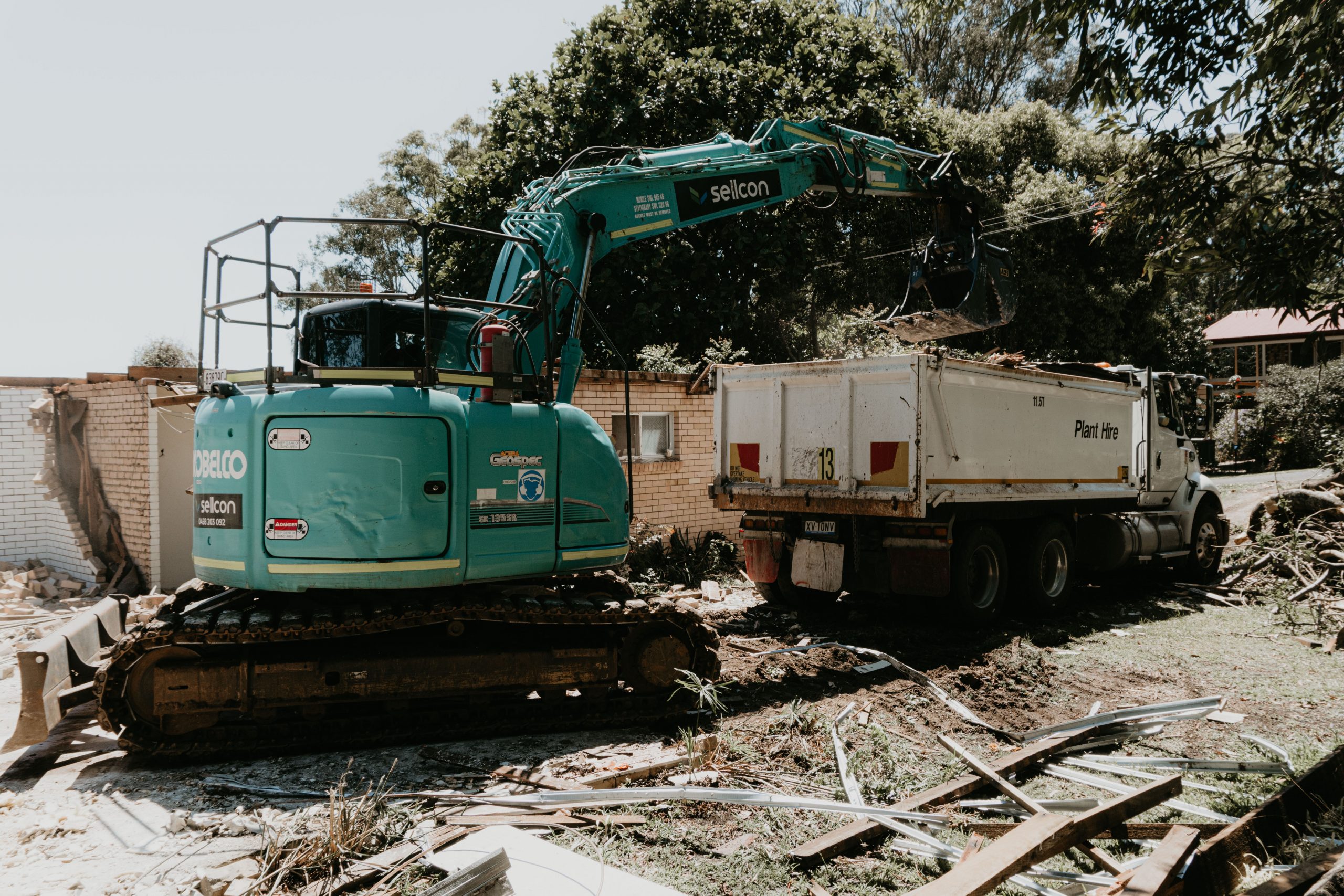
How to Choose the Best Demolition Contractor on the Sunshine Coast
Hiring a demolition contractor isn’t like hiring a painter. If it goes wrong, you’re not looking at a patchy wall, you’re looking at damaged neighbouring property, an asbestos fine from Workplace Health and Safety Queensland, or a half-cleared site that holds up your build for months. So it pays to choose carefully.
The good news is that working out who’s actually any good isn’t complicated. It comes down to a handful of things: are they licensed, are they insured, have they completed projects like yours before, and can they talk you through the process without dodging questions? This article walks through what to look for, what to ask, and the warning signs worth taking seriously before you sign anything.
Start With Licensing and Insurance
This is the non-negotiable bit. Anyone you hire to demolish a structure on the Sunshine Coast needs to be properly licensed for the work they’re doing. In Queensland, demolition is regulated by Workplace Health and Safety Queensland (WorkSafe Queensland). A demolition work licence is required for higher-risk jobs, bringing down structures with pre or post-tensioned components, using load-shifting machinery such as excavators or loaders, or demolishing by explosives or induced collapse. Asbestos removal is licensed separately, also through WorkSafe Queensland.
Ask for their licence details and check them. WorkSafe Queensland issues and oversees these licences, so you can confirm a contractor holds a current demolition licence before you commit to anything. If someone’s reluctant to hand over their details, that’s your answer right there.
Public liability insurance is the other one to confirm. Demolition involves heavy machinery, falling debris, dust, and neighbouring properties that don’t want any of those things landing on them. A contractor without proper cover leaves you exposed if something goes wrong, and something occasionally does.
Sellcon is fully licensed and insured to offer residential, commercial, and industrial demolition services across the Sunshine Coast, Brisbane, and the rest of Southeast Queensland. We’re happy to provide documentation up front.
Look for Local Experience, Not Just Years in Business
A contractor who’s done twenty years of demolition in Melbourne knows demolition. They don’t necessarily know the Sunshine Coast Regional Council’s permit process, the soil conditions in Buderim, or how to time a job around school traffic in Maroochydore.
Local experience matters because it speeds everything up. A local contractor knows which council officers to talk to, knows the recycling and waste facilities that take what, and has relationships with the asbestos assessors and licensed removalists in the area. That translates to fewer delays and fewer surprises on the invoice.
When you’re shortlisting, ask how long they’ve been delivering demolition services on the Sunshine Coast and ask for examples of recent local work. Sellcon has been doing this for over 16 years across the Sunshine Coast and Brisbane, and most of our work comes from repeat clients and referrals from builders, developers, and homeowners who trust us with their demolition projects.
Check They’ve Done Your Type of Demolition
Demolition isn’t one job. It’s several. A house demolition on a tight suburban street is a different skill set from clearing an industrial shed on acreage, which is different again from commercial demolition on a multi-tenancy building in a busy precinct.
A good residential contractor isn’t automatically the right call for a commercial job, and vice versa. So when you’re vetting contractors, ask specifically about the type of work you need:
- Residential: house demolition, shed demolition, garage demolition, partial demolitions
- Commercial: retail, office, hospitality, multi-tenancy buildings
- Industrial: warehouses, factories, large-scale site clearance
Ask for two or three examples of completed jobs that look like yours, and ideally, ask if you can drive past one of the cleared sites. The finish quality of a cleared site tells you a lot about how the contractor works.
Sellcon covers all three categories, with the equipment and crew to match. We specialise in demolition only, so the team that quotes the project is the team that completes it.
Ask How They Handle Asbestos
If your building was constructed before the late 1980s, there’s a reasonable chance asbestos is in there somewhere. Roof sheeting, eaves, wet area linings, vinyl flooring, fence sheets. It needs to be identified, removed by a licensed asbestos removalist, and disposed of at an approved facility. This is regulated tightly in Queensland for good reason.
The question to ask isn’t if a contractor handles asbestos, it’s how. A solid answer sounds like this: we conduct a hazardous materials inspection during the site assessment, engage a licensed asbestos removalist (or hold the licence ourselves), notify Workplace Health and Safety Queensland where required, document the removal, and dispose of waste at an approved facility with disposal dockets you keep on file.
A weak answer sounds like “yeah, we’ll sort it” with no detail.
At Sellcon, demolition asbestos removal is assessed as part of every site visit we do. Where removal is required, we coordinate it under controlled conditions with full documentation, so there’s a paper trail if anyone asks down the track.
Make Sure They Handle Permits and Notifications
Demolition on the Sunshine Coast almost always requires a permit from the local council, and depending on the job, you might also need utility disconnection paperwork, neighbour notifications, traffic management plans, and asbestos removal notifications.
This is where a lot of homeowners come unstuck. They assume the contractor handles it, the contractor assumes the homeowner handles it, and the job stalls for three weeks while someone sorts out a form.
Ask directly: who lodges the demolition permit, who notifies the neighbours, who arranges the utility disconnections, and who’s responsible if any of it gets delayed. The answer should be clear, written down in the quote, and ideally, the contractor’s job rather than yours.
Sellcon manages the full permit and compliance process for clients, including neighbour notifications and any asbestos paperwork required by Workplace Health and Safety Queensland. You shouldn’t need to chase the council to get your job started.
Read the Quote Properly
A demolition quote should tell you exactly what’s included and what’s not. The vague ones are the dangerous ones.
Things a good quote covers:
- Scope of demolition (what’s being removed, what’s staying)
- Site preparation and protection of surrounding structures
- Asbestos identification and removal, if applicable
- Permit fees and who’s lodging them
- Waste removal, disposal, and any recycling
- Site clean-up and what condition the site will be left in
- Timeframe and payment schedule
Things a vague quote leaves out: any of the above.
If you’re comparing quotes and one is significantly cheaper, work out why before you celebrate. Usually, it’s because something’s missing. Common omissions are demolition, asbestos removal, concrete slab removal, tree removal, and final site clean-up. By the time those get added as variations, the “cheap” quote isn’t cheap anymore.
A well-priced quote isn’t the lowest one. It’s the one that gets the job done without nasty surprises.
Check What Happens to the Waste
A demolition site generates a lot of material. Timber, concrete, brick, metal, plasterboard, roofing, fixtures. Where it ends up matters for two reasons: cost and environmental impact.
A contractor who sends everything to the landfill is paying tip fees on the whole lot, and that cost ends up in your quote. A contractor who sorts and recycles diverts a big chunk of it (concrete gets crushed for road base, metal goes to scrap, timber can be reused or chipped), which reduces disposal costs and keeps useful material out of landfill.
Ask what their typical recycling rate is and what happens to salvageable materials. If they can’t answer, they’re probably skipping the sort and sending it all to the tip.
At Sellcon, we salvage and recycle wherever it’s practical. Concrete, metal, timber, and other materials get diverted from landfill where the project allows, and we can talk you through what’s reusable on a specific site during the assessment.
Watch for the Red Flags
After a few hundred quotes, patterns emerge. Here are the ones worth taking seriously:
No fixed address or only a mobile number. A contractor with no physical presence is a contractor that’s hard to chase if something goes wrong.
Cash-only or large upfront deposits. A reasonable deposit is normal. A demand for most of the job upfront in cash is not.
Reluctance to provide licence or insurance details. Mentioned earlier, worth repeating. If they won’t show you the paperwork, assume there isn’t any.
No written quote, just a verbal price. Get it in writing or don’t proceed.
Pressure to sign quickly. Demolition isn’t an impulse purchase. A contractor pressuring you to commit before you’ve had time to think is usually trying to stop you from getting other quotes.
No references or recent examples. Anyone who’s been working locally has a list of jobs they can point to. If they can’t, ask yourself why.
What to Ask on the First Phone Call
If you only have ten minutes, these are the questions that sort the good from the average:
- Are you QBCC licensed, and what’s your licence number?
- Do you have public liability insurance, and for how much?
- How long have you been doing demolition on the Sunshine Coast?
- Have you done a job like mine in the last twelve months?
- Who handles the permits and council notifications?
- How do you deal with asbestos if you find it?
- What’s included in the quote, and what would count as a variation?
- When could you start, and how long will it take?
If the answers are clear, specific, and consistent, you’ve probably found a contractor worth getting a quote from. If they’re vague or evasive, keep calling.
The Sellcon Approach
We’ve built Sellcon on being the contractor that answers those questions properly. Owner-operated, locally based, and trusted by Sunshine Coast and Brisbane builders, developers, and homeowners for over 16 years. Our experts deliver safe, reliable, and professional demolition services across every project, from the first site visit through to final clean-up.
We’re upfront about what’s included in a quote, we manage the permits and the asbestos paperwork, and we ensure sustainability is part of the job rather than an add-on. Most of our work comes from clients who’ve used our demolition services before or been referred by someone who has, and that’s the part we’re proudest of.
If you’re at the start of the contractor search, the best next step is a site assessment. It’s free, there’s no obligation, and you’ll walk away with a clear quote and a realistic timeframe even if you decide to go elsewhere.
Call 0458 203 092 or get a free quote online.
Frequently Asked Questions
How long does a typical house demolition take on the Sunshine Coast?
For a standard residential demolition, the on-site work usually takes between two and five days once the job starts. A straightforward timber home on a flat block can be down and cleared in a couple of days, while a brick home, a multi-storey property, or a site with tricky access takes longer. The bigger timeline to plan for is the lead-in: permits, neighbour notifications, utility disconnections, and any asbestos paperwork can take three to six weeks before demolition actually begins. A good contractor will give you a realistic start-to-finish timeline in the quote, not just the days the machines are on site.
Do I need to be on site during the demolition?
No, and most clients aren’t. Once the job’s been quoted, permits are sorted, and the start date is locked in, the contractor handles the rest. You’ll be kept updated on progress, and you’re welcome to visit, but you don’t need to be there. What you do need to do is make sure the site is accessible, anything you want to keep has been removed (fixtures, plants, sheds you’re not demolishing), and the contractor has clear instructions on anything specific to the property. A professional crew will keep the project running safely without you needing to babysit it.
What’s the difference between a demolition contractor and a house removalist?
A demolition contractor tears the building down and disposes of the materials. A house removalist lifts the building intact, puts it on a truck, and relocates it to another site. They’re different jobs requiring different equipment and licences. If your home is structurally sound and architecturally suitable, removal can be a cheaper option than demolition and keeps the building out of landfill. If the structure isn’t worth saving, or the site doesn’t allow truck access for a relocation, demolition is the practical choice. A good demolition contractor will tell you honestly which option suits your situation.
Will the demolition damage my neighbour’s property or fences?
It shouldn’t, and if it does, that’s what public liability insurance is for. A competent contractor protects boundaries before any work starts, uses controlled techniques to bring structures down inward, and manages dust and debris carefully. Shared fences are usually the main concern, and you’ll want to confirm with the contractor whether the fence is staying or going, and whether the neighbour has been notified. Sellcon notifies neighbouring properties as part of the permit process and works to minimise disruption to surrounding homes throughout the job.
Can I salvage materials from my house before it’s demolished?
Yes, and it’s worth thinking about early. Hardwood flooring, doors, windows, kitchen fittings, bathroom fixtures, light fittings, and architectural details can have real resale or reuse value. The catch is timing: anything you want to keep needs to be out before the demolition crew arrives, because once the job starts, there’s no going back. Talk to your contractor during the site assessment about what’s worth salvaging. Sellcon can advise on what’s reusable and, where it makes sense, coordinate salvage as part of the demolition project rather than leaving it all to you.
Related Posts